Access Control Modernisation at the Research and Innovation Institute
.jpg)
The Research and Innovation Institute is a public research institute in Riga specialising in organic chemistry, pharmaceutical research, molecular biology and bioorganic chemistry. With more than 65 years of experience in drug discovery and technology development, its premises support the daily work of researchers, specialists and administrative staff.
Access control is an important part of this environment, helping the institute manage employee entry and access rights across its premises.
The institute had previously relied on Daccess, an access control system developed by BISS. As Daccess had become a legacy platform and was no longer being actively developed, the existing access control environment required modernisation.
The objective was to move to a newer platform while retaining infrastructure that could still be used. Existing employee cards, cabling and compatible equipment therefore formed part of the transition rather than being replaced unnecessarily.
BISS migrated the institute from Daccess to FidPark, combining updated software and access equipment with selected elements of the existing installation. Completed in August 2026, the project provided the Research and Innovation Institute with a modernised access control environment while maintaining continuity for employees and administrators.
Project Overview
The project introduced FidPark as the new access control platform at the Research and Innovation Institute’s premises at Aizkraukles iela 21 in Riga. The previous Daccess environment was replaced, while parts of the installed infrastructure were retained where they remained suitable for continued use.
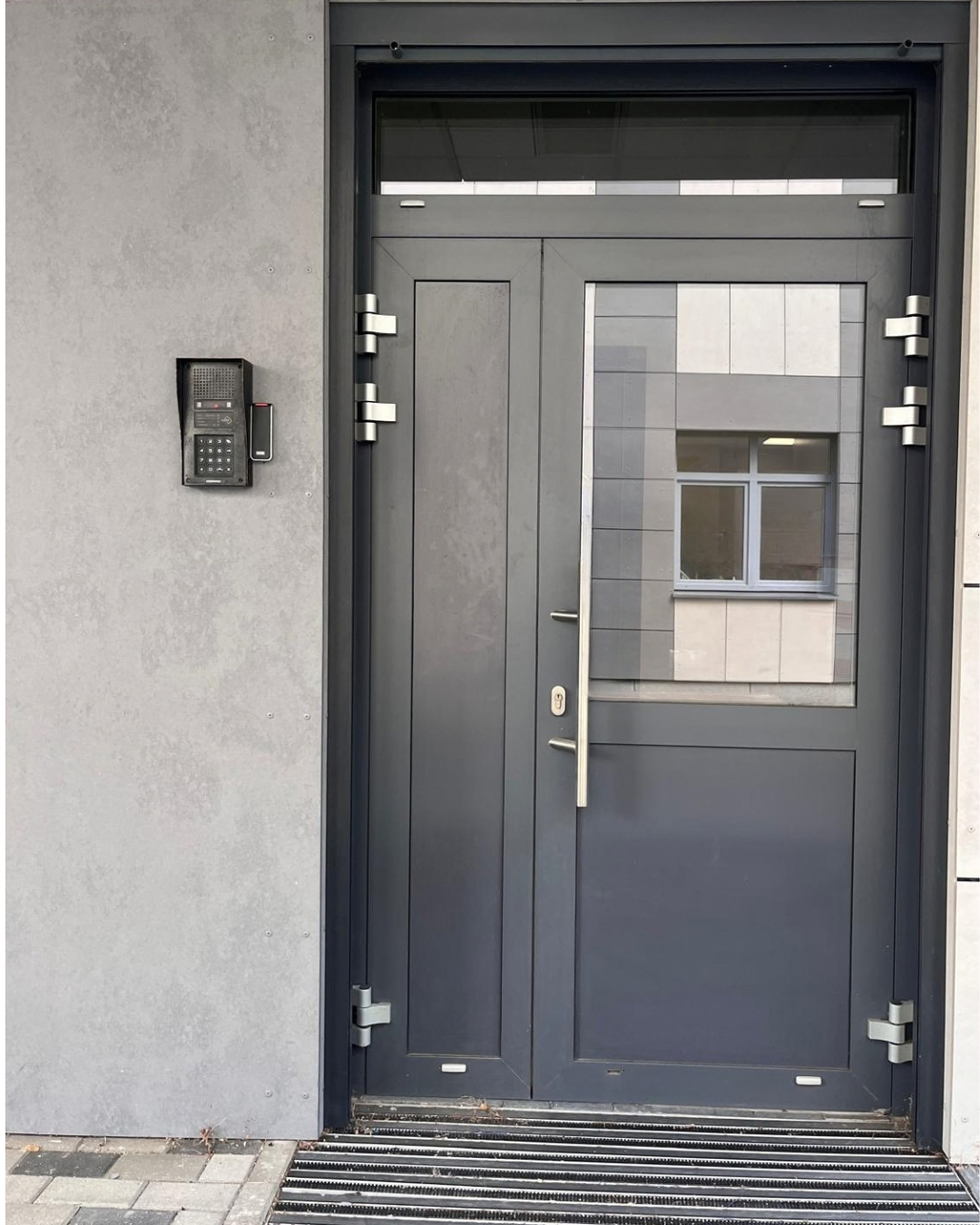
BISS delivered FidPark software together with 56 contactless card readers and updated access controllers and power equipment where required. The scope also included door equipment works, system configuration and commissioning, database migration, staff training and implementation documentation.
For employees, the transition required minimal changes to the existing access process. Current contactless cards remain in use, with FidPark managing the access rights assigned to each card. This avoided the need for an organisation-wide replacement of employee credentials during the migration.
Administrators manage access rights through FidPark, including the creation and extension of employee passes, permission management, reporting and system configuration. The platform is available through a web browser, allowing authorised users to access the administration environment from different computers instead of relying on individual dedicated workstations.
Unlike the legacy Daccess environment, FidPark continues to be actively developed with regular software updates, fixes and new functionality. This gives the institute a platform that can evolve further over time, with additional capabilities such as more detailed working-time management, employee wall terminals, work groups and expanded reporting available as future needs develop.
The existing Daccess database was migrated to FidPark as part of the transition, preserving the information already used for access management. FidPark operates on the client’s own server.
The hardware modernisation followed the same approach. Existing cable lines and compatible control modules were retained where technically suitable, while readers and other components were updated where required. The new readers also support more secure card profiles, giving the institute the option to introduce newer credential technology in the future.
Staff training formed part of the implementation, preparing institute personnel to work with the new FidPark administration environment and its day-to-day functions.
Benefits
- Reduced disruption during modernisation: The transition to FidPark can be completed without replacing the full access control infrastructure, limiting unnecessary changes across the premises.
- Continuity for employees: Existing contactless cards remain in use, so employees do not need new credentials as part of the current migration.
- Flexible administration: Browser-based access allows authorised personnel to manage passes, permissions and other access functions from different suitable workstations.
- Efficient use of existing infrastructure: Compatible cabling and control equipment can remain in service instead of being replaced solely as part of the platform upgrade.
- Centralised access management: Employee passes, access rights, reporting and relevant system configuration are managed within the FidPark environment.
- Continuity of access data: Migration of the existing database allows the Research and Innovation Institute to continue working with access information from the previous system.
- Prepared for future development: Support for more secure card profiles gives the institute the option to introduce newer credential technology gradually when required.
Impact and Results
- Daccess migrated to FidPark: The Research and Innovation Institute now uses FidPark as the main platform for employee access administration.
- 56 contactless readers installed: The modernised installation includes 56 new card readers across the access control environment.
- Existing infrastructure incorporated into the upgrade: Suitable cable lines and compatible control modules remained part of the installation, while the components requiring modernisation were updated.
- Existing access information transferred: Data from the previous Daccess environment was migrated to FidPark as part of the implementation.
- Web-based administration established: Authorised personnel can now manage the access control environment through the FidPark browser-based interface.
Facts and Data
Location: Aizkraukles iela 21, Riga, Latvia
Installation year: August 2026
Project type: Access control system modernisation
Core platform: FidPark
Client: Research and Innovation Institute
Solution provider: BISS